The claim
“End your sauna session on cold to burn more fat.”
Hot air. No human study has compared finishing a sauna session on cold with finishing it on heat for fat burning or any other outcome. The rule carries Susanna Søberg's name, and her 2021 paper never mentions it.
Updated Sep 24, 2026 · 3 studies reviewed
Nothing solid supports it, or the evidence points the other way.
People say it in places like these
Huberman Lab podcast
He named ending on cold the Søberg principle and says reheating on your own raises your metabolism.
See an example ↗Huberman Lab newsletter
End with cold and skip the towel, because shivering switches on brown fat.
See an example ↗Søberg Institute blog
The 2021 study found that finishing on cold gives stronger brown fat activation.
See an example ↗
The research found this
Susanna Søberg's team published a study of Danish winter swimmers in 2021, and Andrew Huberman named a rule of ending on cold after her in a 2022 podcast episode.Source 1 · Cross-sectional studyAltered brown fat thermoregulation and enhanced cold-induced thermogenesis in young, healthy, winter-swimming menSøberg S, Löfgren J, Philipsen FE, et al.. Cell Reports Medicine, 2021.Read the paper ↗PubMed ↗Source 2 · PodcastUsing Deliberate Cold Exposure for Health and Performance (episode 66)Huberman A. Huberman Lab podcast, 2022.Read the page ↗ People now call it the Søberg principle.
The paper doesn't contain the rule. Its full text says nothing about finishing on cold, and none of its experiments put heat and cold in any order.Source 1 · Cross-sectional studyAltered brown fat thermoregulation and enhanced cold-induced thermogenesis in young, healthy, winter-swimming menSøberg S, Löfgren J, Philipsen FE, et al.. Cell Reports Medicine, 2021.Read the paper ↗PubMed ↗ The authors speculated that heat acclimation from the swimmers' 57 minutes of sauna a week might explain why they ran cooler over 24 hours and showed no brown fat activity at a comfortable temperature.
Researchers haven't compared a cold finish with a warm one for energy use or brown fat. A 2013 meta-analysis of contrast water therapy noted whether each trial ended hot or cold and never analyzed its results by that.Source 3 · Meta-analysisContrast Water Therapy and Exercise Induced Muscle Damage: A Systematic Review and Meta-AnalysisBieuzen F, Bleakley CM, Costello JT. PLoS ONE, 2013.Read the paper ↗PubMed ↗ A 2026 systematic review of 21 contrast studies reported no energy or brown fat outcomes. It did notice that blood pressure fell after sessions more often when heat came last, though the authors drew that pattern from comparing different studies.Source 4 · Systematic reviewCardiometabolic effects of contrast therapy: A systematic reviewde Haan V, Plasqui G, Pallubinsky H. Experimental Physiology, 2026.Read the paper ↗PubMed ↗
Cold raises energy use both in the water and during rewarming. After 48 minutes of cycling and a seated rest, 21 trained men sat waist-deep in 10°C water for 15 minutes. At the end of the immersion their oxygen use was 7.16 ml/min/kg against 4.83 without it.Source 5 · Crossover trialMechanism involved of post-exercise cold water immersion: Blood redistribution and increase in energy expenditure during rewarmingGiraud D, Pomportes L, Nicol C, et al.. Temperature, 2024.Read the paper ↗PubMed ↗ That gap works out to roughly 0.8 kcal a minute at that point, and the authors describe the rewarming that followed as metabolically costly.
In a 2026 trial in Wales, every sauna break on the dip day began with 90 seconds in 19.9°C water, so the last hot round was followed by cold. Fifteen minutes into recovery, core temperature on the dip day ran 0.63°C lower than on the air-only day, and the study didn't measure energy use.Source 6 · Crossover trialThermal and cardiovascular responses to sauna are attenuated by adding cold water immersion to cooling breaksOwen TF, Giles CJ, Leaney SF, et al.. Experimental Physiology, 2026.Read the paper ↗PubMed ↗
The dial reads 92°H for four reasons
How the reading adds up
23 + 20 + 25 + 24 = 92°H
EvidenceWhat kind of evidence exists in people?
23/25Nobody has tested whether the last temperature of a session changes fat burning. A 2026 systematic review of 21 contrast-therapy studies contains no energy-expenditure or brown fat outcome at all.Source 4 · Systematic reviewCardiometabolic effects of contrast therapy: A systematic reviewde Haan V, Plasqui G, Pallubinsky H. Experimental Physiology, 2026.Read the paper ↗PubMed ↗
ConsistencyHas the finding held up?
20/25With no test of the rule there's nothing to replicate. A 2013 meta-analysis recorded whether each contrast trial ended hot or cold and never analyzed outcomes that way, and a 2026 trial that always ended on cold had no warm-finish group.Source 3 · Meta-analysisContrast Water Therapy and Exercise Induced Muscle Damage: A Systematic Review and Meta-AnalysisBieuzen F, Bleakley CM, Costello JT. PLoS ONE, 2013.Read the paper ↗PubMed ↗Source 7 · Randomized trialContrast Heat–Cold Versus Thermoneutral Showering in Trained Combat Sport Athletes: A Randomized Field Trial of Recovery OutcomesHagner-Derengowska M, Trybulski R, Kruk J, et al.. Journal of Sports Science and Medicine, 2026.Read the paper ↗PubMed ↗
MagnitudeDoes the claim match the size of the effect?
25/25The promised extra fat burn is an effect no study has measured. A 2026 sauna trial with cold dips in the breaks tracked core temperature and heart rate and didn't measure energy use.Source 6 · Crossover trialThermal and cardiovascular responses to sauna are attenuated by adding cold water immersion to cooling breaksOwen TF, Giles CJ, Leaney SF, et al.. Experimental Physiology, 2026.Read the paper ↗PubMed ↗
DoseDoes the studied protocol match how people use it?
24/25No protocol has set a cold finish against a warm one in a sauna session. The closest rewarming data come from 15 minutes waist-deep in 10°C water after 48 minutes of cycling, and no sauna was involved.Source 5 · Crossover trialMechanism involved of post-exercise cold water immersion: Blood redistribution and increase in energy expenditure during rewarmingGiraud D, Pomportes L, Nicol C, et al.. Temperature, 2024.Read the paper ↗PubMed ↗
The claim drifts from the data here
Naming the rule after a scientist makes it sound tested. Søberg's paper records how often the swimmers dipped and how long they sat in the sauna, and it says nothing about which came last.Source 1 · Cross-sectional studyAltered brown fat thermoregulation and enhanced cold-induced thermogenesis in young, healthy, winter-swimming menSøberg S, Löfgren J, Philipsen FE, et al.. Cell Reports Medicine, 2021.Read the paper ↗PubMed ↗
The fat-burning promise stretches a real effect. Rewarming after cold costs energy, and nobody has shown that the extra burn from finishing on cold adds up to lost fat.Source 5 · Crossover trialMechanism involved of post-exercise cold water immersion: Blood redistribution and increase in energy expenditure during rewarmingGiraud D, Pomportes L, Nicol C, et al.. Temperature, 2024.Read the paper ↗PubMed ↗ The brown fat studies behind the idea used hours of cold air a day. In one of them, ten days left body weight and body composition unchanged.Source 8 · Clinical trialCold acclimation recruits human brown fat and increases nonshivering thermogenesisvan der Lans AA, Hoeks J, Brans B, et al.. Journal of Clinical Investigation, 2013.Read the paper ↗PubMed ↗ The fat-burning claim covers that evidence in full.
Put it to use
End your session in whichever order you enjoy, since nobody has tested the order for fat loss. In a 2026 sauna trial, cold dips in the breaks made the heat easier to bear and left hearts 17 beats a minute slower by the end of the second round.Source 6 · Crossover trialThermal and cardiovascular responses to sauna are attenuated by adding cold water immersion to cooling breaksOwen TF, Giles CJ, Leaney SF, et al.. Experimental Physiology, 2026.Read the paper ↗PubMed ↗
From our sister magazine
Sauna Monthly explains how to run hot and cold sessions at home
Sauna Monthly · Guide
Run the Nordic hot and cold cycle at home
Sauna Monthly covers contrast sessions and the choice between an ice barrel and a chiller.
Sauna Monthly · Guide
Time your plunge around your training
Hard cold works best a few hours away from hard lifting.
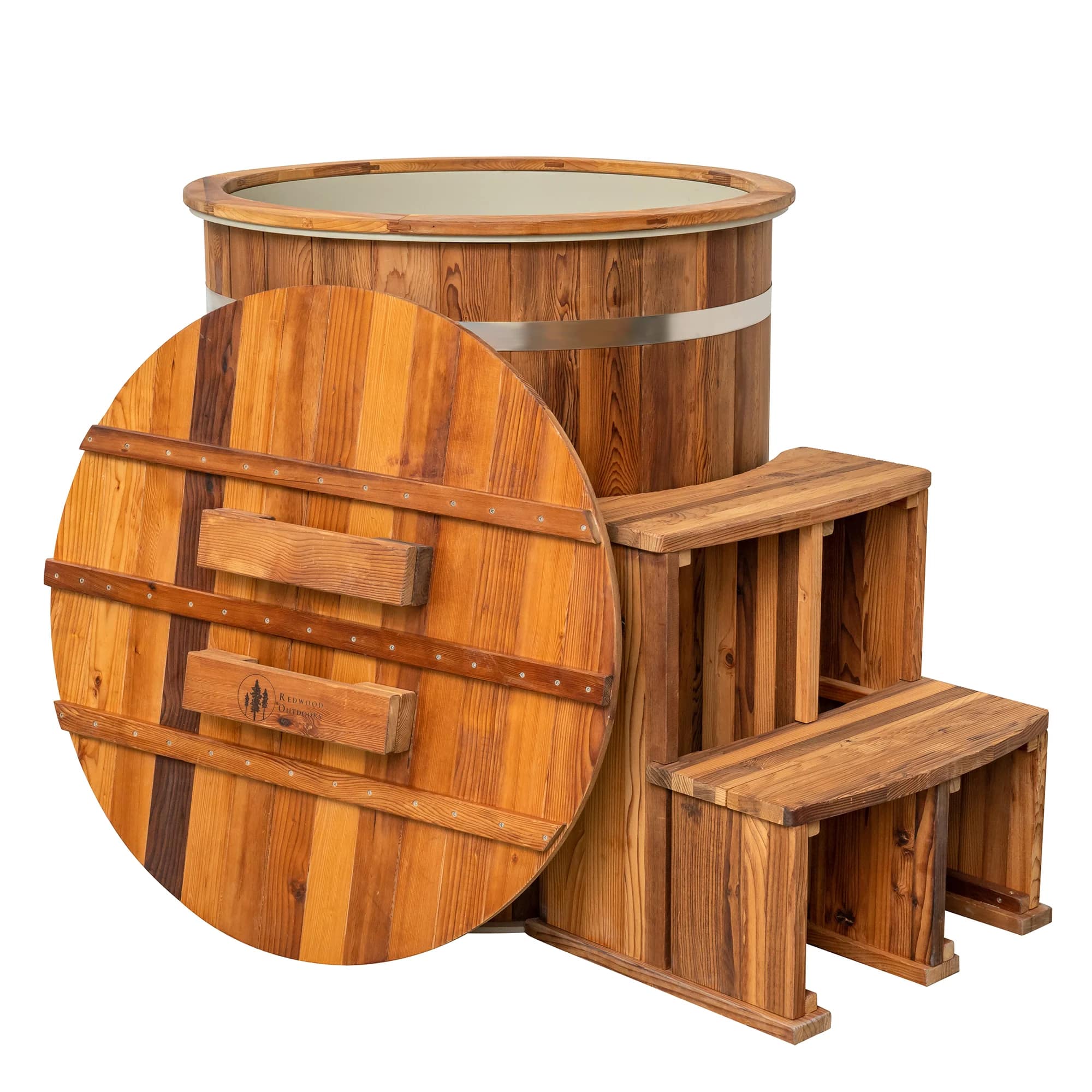
Redwood Outdoors
Redwood Alaskan Cold Plunge Tub
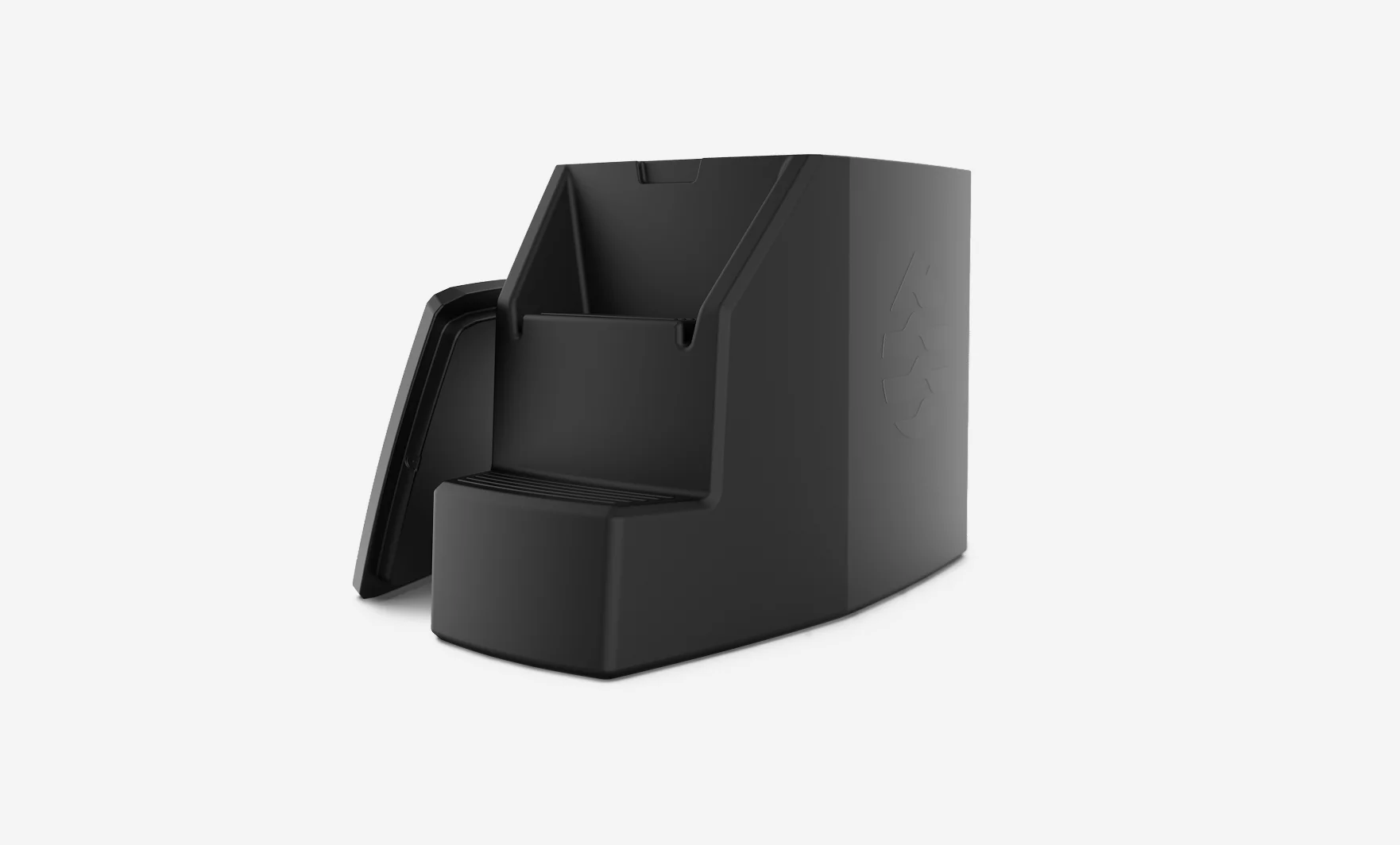
Ice Barrel
Ice Barrel 500
People also ask
What is the Søberg principle?
It's the rule of ending a hot and cold session on cold. Andrew Huberman named it after Susanna Søberg in a 2022 podcast episode, and her 2021 study of winter swimmers never tested it.Source 2 · PodcastUsing Deliberate Cold Exposure for Health and Performance (episode 66)Huberman A. Huberman Lab podcast, 2022.Read the page ↗Source 1 · Cross-sectional studyAltered brown fat thermoregulation and enhanced cold-induced thermogenesis in young, healthy, winter-swimming menSøberg S, Löfgren J, Philipsen FE, et al.. Cell Reports Medicine, 2021.Read the paper ↗PubMed ↗
Should you end on cold or hot after a sauna?
No study has compared the two for fat burning or recovery. A 2026 review noticed that blood pressure fell after sessions more often when heat came last, though that pattern comes from comparing different studies.Source 4 · Systematic reviewCardiometabolic effects of contrast therapy: A systematic reviewde Haan V, Plasqui G, Pallubinsky H. Experimental Physiology, 2026.Read the paper ↗PubMed ↗
Does rewarming after a cold plunge burn calories?
It burns some. At the end of 15 minutes waist-deep in 10°C water after exercise, oxygen use ran about 0.8 kcal a minute above a dry rest, and the authors called the rewarming afterward metabolically costly.Source 5 · Crossover trialMechanism involved of post-exercise cold water immersion: Blood redistribution and increase in energy expenditure during rewarmingGiraud D, Pomportes L, Nicol C, et al.. Temperature, 2024.Read the paper ↗PubMed ↗ No study has measured the energy cost of a plunge of two or three minutes.
Check these claims next
89°H
Hot air
“Eleven minutes of cold a week is the ideal dose.”
A 2021 paper added up the cold-water habits that seven Danish winter swimmers reported and got 11 minutes a week. The study never assigned or compared a dose, and its lab cold came from water-perfused blankets.
72°H
Stretched
“Cold plunges burn fat by switching on brown fat.”
Cold does switch on brown fat in people. The one controlled study that measured fat used two hours of 17°C air a day for six weeks and took off 0.7 kg of fat, and nobody has measured fat loss from plunges.
64°H
Stretched
“Alternating hot and cold works better than either one alone.”
After exercise, alternating hot and cold water eases soreness compared with resting and does no better than cold water on its own. In a sauna, cold dips between rounds made the heat easier to bear for one session, and nobody has tracked the long-term effects.
We cited these sources
- 01Søberg S, Löfgren J, Philipsen FE, Jensen M, Hansen AE, Ahrens E, et al.. Altered brown fat thermoregulation and enhanced cold-induced thermogenesis in young, healthy, winter-swimming men. Cell Reports Medicine. 2021;2(10):100408. doi:10.1016/j.xcrm.2021.100408 PMID 34755128
- 02Huberman A. Using Deliberate Cold Exposure for Health and Performance (episode 66). Huberman Lab podcast. 2022. Accessed Sep 24, 2026.
- 03Bieuzen F, Bleakley CM, Costello JT. Contrast Water Therapy and Exercise Induced Muscle Damage: A Systematic Review and Meta-Analysis. PLoS ONE. 2013;8(4):e62356. doi:10.1371/journal.pone.0062356 PMID 23626806
- 04de Haan V, Plasqui G, Pallubinsky H. Cardiometabolic effects of contrast therapy: A systematic review. Experimental Physiology. 2026:EP093612. doi:10.1113/EP093612 PMID 42667694
- 05Giraud D, Pomportes L, Nicol C, Bertin D, Gardarein JL, Hays A. Mechanism involved of post-exercise cold water immersion: Blood redistribution and increase in energy expenditure during rewarming. Temperature. 2024;11(2):137-156. doi:10.1080/23328940.2024.2303332 PMID 38846524
- 06Owen TF, Giles CJ, Leaney SF, Coombs GB, Oliver SJ. Thermal and cardiovascular responses to sauna are attenuated by adding cold water immersion to cooling breaks. Experimental Physiology. 2026:EP093626. doi:10.1113/EP093626 PMID 42390474
- 07Hagner-Derengowska M, Trybulski R, Kruk J, Clemente FM, Olchowy C, Pilis K. Contrast Heat–Cold Versus Thermoneutral Showering in Trained Combat Sport Athletes: A Randomized Field Trial of Recovery Outcomes. Journal of Sports Science and Medicine. 2026;25(3):675-690. doi:10.52082/jssm.2026.675 PMID 42713556
- 08van der Lans AA, Hoeks J, Brans B, Vijgen GH, Visser MG, Vosselman MJ, et al.. Cold acclimation recruits human brown fat and increases nonshivering thermogenesis. Journal of Clinical Investigation. 2013;123(8):3395-3403. doi:10.1172/JCI68993 PMID 23867626